













Cookies 🍪
By clicking "Accept", you authorize Meilleur du Chef to store cookies on your device to personalize site content, analyze our traffic, and provide social media functionality.


Favourites


In one click, store and find all your favourite recipes.
Add this recipe >
Lemon sorbet: To make this raspberry, mango, and lemon vacherin recipe, start by making the lemon sorbet. I used the Ravifruit lemon sorbet mix.

Pour half of the sorbet mix into the ice cream maker...

...and close the lid.

Turn on the ice cream churner. With the machine I used, the churning process took about 1 hour until I got the right texture.

Transfer the lemon sorbet into a container with a lid and store it in the freezer.

Mango sorbet: We are going to use the mango sorbet mix.

Pour half of the sorbet mix the ice cream maker...

...then close the lid and start churning...

...until you get a mango sorbet.

Transfer the sorbet into another container, also equipped with a lid, and store it in the freezer.

Raspberry sorbet: We are going to use the raspberry sorbet mix.

Pour half of the sorbet mix into the ice cream maker...

...and churn for about 1 hour...

...until the raspberry sorbet is obtained. Transfer this sorbet into a third container.

Smooth the surface with a spoon, close the container and store in the freezer. It is best to make these three sorbets the day before so that they have time to firm up in the freezer. This will facilitate the assembly process.

Swiss meringue: Prepare the ingredients.

Pour the egg whites and caster sugar into the stand mixer bowl.

Heat a little water in a saucepan to create a bain-marie.

Whisk the egg whites and sugar together over the double boiler...

...until the mixture reaches approximately 50°C.

Place the bowl on the mixer base and whisk at high speed to obtain a Swiss meringue.

Whip until the preparation has cooled down completely so that the meringue gains volume and texture.

We want to achieve a meringue that forms stiff peaks, as shown in the photo.

Transfer this meringue into a piping bag and pipe strips of meringue onto the white part of the silicone baking mat...

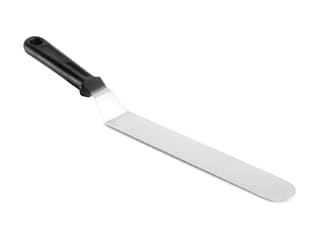
...then spread it across the mat using a cranked metallic spatula to a thickness of 2 to 3mm. There should be enough preparation to cover the mat.

Repeat the operation with a second silicone mat. Note that a thinner layer of preparation will make the meringue too fragile, and a thicker layer will make the meringue too chunky (aesthetically).

Slide each of the silicone mats onto a perforated baking sheet.

Place the sheets in a preheated oven at 90°C and bake for at least 2 hours.

Take a mousse ring Ø 16cm and trace two rings on a sheet of parchment paper with a pencil.

Flip the sheet of parchment paper so that the pencil ring side is facing down, and place it on a baking sheet. You should be able to see the drawn rings through the paper.

Pipe the remaining Swiss meringue into the drawn rings in a spiral shape, starting from the centre and form 3 meringue discs with a thickness of about 1cm. You will need 2 baking sheets.

Slightly smooth the surface of the meringue discs to erase the spiral pattern.

Pipe small drop-shaped meringues of various sizes all around the discs. These will be used for decoration. Do the same on a second sheet. I recommend making a fourth meringue disc in case of there is some breakage.

Place the baking trays in a preheated oven at 90°C and bake for about 2 hours and 30 minutes. You can also bake all the meringues (slab and discs) together at the same time.

At the end of baking, take the trays with the meringue discs out of the oven...

...as well as the trays with the meringue slabs...

...and let cool at room temperature.

Transfer the mini meringues onto a dish.

Make sure that the size of the meringue discs matches the mousse ring Ø 16cm. If the meringue discs are too wide, do not hesitate to trim them with the blade of a knife or a serrated knife not to break them. Meringue is fragile and very brittle.

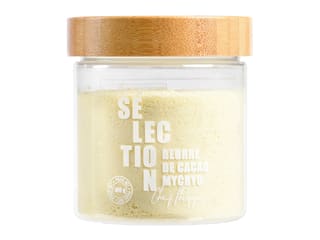
Sealing the meringue: Place cocoa butter pistoles (or Mycryo cocoa butter) in a saucepan...

...and melt it over very low heat.

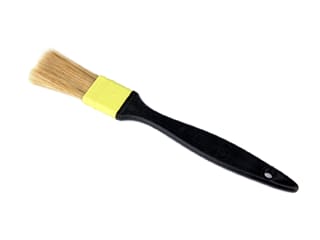
Using a pastry brush, apply a thin layer of the melted cocoa butter over both sides of the meringue discs. Place in the fridge to set until ready to use.

Assembly: Take the springform charlotte mould and take out the 3 sorbets made the day before. They will have firmed up while remaining workable.

Place a meringue disc in the bottom of the mould.

Add the raspberry sorbet onto the meringue disc with a spoon...

...spreading it gently not break the meringue, while forming a layer with a thickness of 1.5 to 2cm.

It is important to have an even thickness over the entire surface.

Place a second meringue disc. The yellow marks you might see on the meringue are residues of cocoa butter, which will have no impact on the taste.

Press down lightly on the meringue disc to make the meringue stick to the raspberry sorbet. If the meringue disc breaks in two, it doesn't matter. Just be careful not to shatter it into a thousand pieces.

Take the mango sorbet and place it on top of the meringue disc...

...smoothing its surface with the spoon to get an even layer with a thickness of about 1.5cm to 2cm.

Smooth the surface of the mango sorbet using a mini cranked spatula, making sure to go all the way to the edges.

Place a third meringue disc in the mould, pressing it down gently so it adheres to the sorbet.

Spread the lemon sorbet onto the meringue disc...

...and smooth the surface with the mini cranked spatula. You should pretty much reach the top rim of the mould. A vacherin is a thick dessert that has a height of about 10cm.

Cover the surface of the mould with a sheet of plastic wrap and place in the freezer.

Mango and lemon jelly: Prepare all the ingredients.

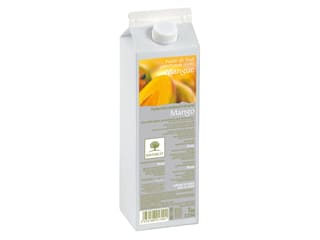
Heat the mango purée and lemon juice in a saucepan.

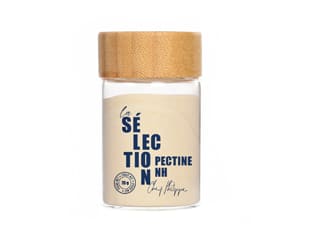
In the meantime, mix the caster sugar with the NH coating pectin, to prevent lumps from forming.

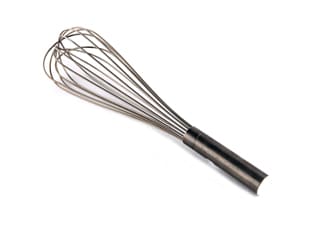
When the purée reaches about 50°C, add the sugar and pectin mixture while whisking the preparation to prevent lumps from forming.

Bring the preparation to a boil, continuing to mix with the whisk. Maintain this boil for 1 minute to activate the properties of the pectin.

Transfer this mango preparation into a food container for quick cooling.

Cover the whole surface directly with a sheet of plastic wrap...

...and place in the fridge to set.

Vanilla mascarpone whipped cream: Prepare all the ingredients.

For this recipe I was thrilled to use vanilla grown in France (available in our shop).

They are fresh vanilla pods sold in a test tube.

Take the vanilla pod...

...and split it in half lengthwise.

Scrape the inside with the tip of a knife to extract the seeds.

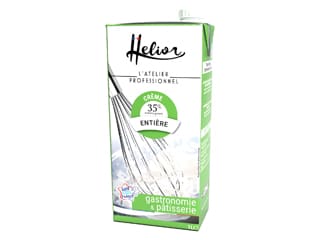
Pour the very cold whipping cream into the mixer bowl and add the vanilla seeds.

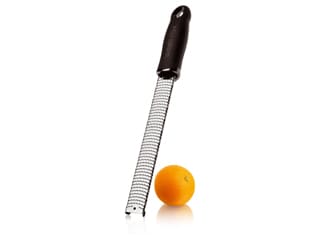
Zest a lime over the cream using a Classic Microplane zester-grater...

...as shown in the photo.

Add the mascarpone and the icing sugar...

...and beat with the whisk attachment...

...until you get a whipped cream texture. Be careful not to over-whip the cream, as it might turn into butter.

The vanilla mascarpone whipped cream is ready.

Finish: Take the mould out of the freezer and remove the plastic wrap. The vacherin must be frozen through.

For best results, slightly warm the sides of the mould with a blowtorch.

Then unclip the latch and slide the mould upwards.

Hold the vacherin by supporting the bottom of the mould with your hand, and carefully smooth the edges of the dessert to get a very flat and smooth surface.

Remove the metal base that is under the vacherin. This part of the mould will detach on its own. The bottom of the dessert is white because of the meringue disc.

Place the vacherin on a pastry tray lined with a sheet of parchment paper and smooth the surface so that it is perfectly flat.

Take the baked meringue slab...

...and cover it with a second sheet of parchment paper.

Place a flat pastry tray on top...

...and flip the whole thing over in a single, quick motion.

Remove the perforated sheet and the silicone mat to release the meringue sheet, which forms a thin leaf...

...and which is likely to break into large pieces, as seen here in the photo. But this is fine. Repeat the operation with the second meringue slab.

Transfer the vanilla mascarpone whipped cream into a piping bag.

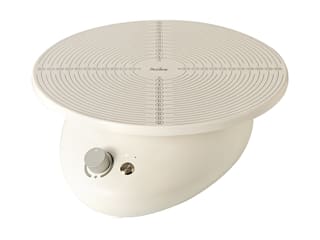
To facilitate the decorating process, I recommend using a turntable.

Place the tray and the vacherin on the turntable and pipe a strip of whipped cream of about 0.5cm all around the vacherin and across the entire height.

Using a dough scraper, smooth the whipped cream by turning the dessert thanks to the turntable. Use the flat part of the scraper.

Pipe a strip of whipped cream in a spiral shape on the surface of the cake...

...and smooth the surface using the mini cranked spatula.

Finish with the flat part of the scraper on the surface...

...and along the sides. Store the vacherin in the freezer until you're ready for the decoration.

Slice half of a mango by sliding the blade along one side against the central stone. Then score the flesh of the mango with the knife down to the skin, without piercing it. Start by making parallel cuts lengthwise...

...then rotate the mango a quarter turn and make parallel cuts to create mango cubes...

...as shown in the photo. Press on the skin side from underneath so as to push out the mango cubes, which will be used to decorate our dessert.

Place all the decorating elements on a board.

Take the mango lemon jelly out of the fridge, pour it into a pastry bowl...

...and mix it with a whisk to smooth it out.

Transfer this mango lemon jelly into a piping bag (without a nozzle).

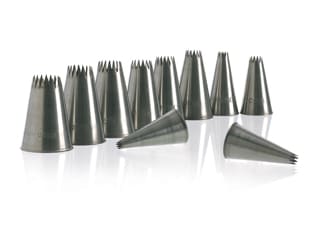
Pour the remaining vanilla mascarpone whipped cream into another piping bag fitted with a star nozzle Ø 18mm to decorate the surface of the dessert. Place a swirl of whipped cream on the back of a broken meringue piece.
Make sure you arrange the meringue chunks on the right side: the side exposed to the open air while baking should be facing out.

Gently place the piece of meringue on the side of the dessert so that it stands vertically.

Take the largest pieces of meringue and arrange them all around the vacherin.

The pieces of meringue should overlap each other a little and must come out at the top of the dessert.

Proceed this way all around the vacherin to achieve an irregular effect.

Once the sides are done, arrange mango cubes on the surface of the dessert.

Also arrange whole fresh raspberries, a few mini meringues, and swirls of vanilla mascarpone whipped cream.

Fill the empty spaces with the mango lemon jelly so the surface of the vacherin is no longer visible.

Finish with some lime zest grated over the surface.

Our raspberry, mango, and lemon vacherin is now done. Keep in the freezer until ready to serve. I recommend decorating the dessert less than 1 hour before serving to prevent the fruits from being entirely frozen.
Enjoy!

Please login to post a review