










Cookies 🍪
By clicking "Accept", you authorize Meilleur du Chef to store cookies on your device to personalize site content, analyze our traffic, and provide social media functionality.


Favourites


In one click, store and find all your favourite recipes.
Add this recipe >
Peach insert: To make this Peach Trompe l'oeil recipe, start by preparing the ingredients for the peach insert.

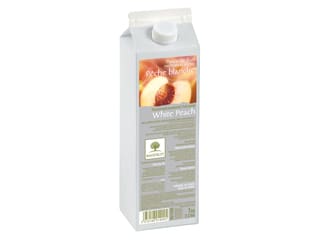
Pour the peach purée into a saucepan. Add 90% of the caster sugar.

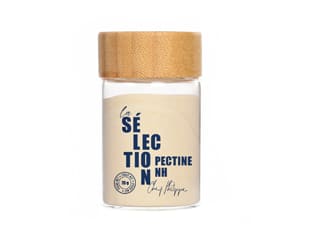
The remaining sugar will be mixed with the pectin NH coating.

Mix to dissolve the sugar into the peach purée.

When the preparation reaches about 50°C, pour in the sugar and pectin mixture while whisking (pectin must always be incorporated combined with sugar and while whisking to prevent lumps from forming).

Mix well and bring to a boil. Maintain this boil for at least 1 minute to activate the properties of the pectin. This cooking time must not be neglected.

After cooking, remove the saucepan from the heat and add the lemon juice. Mix thoroughly.

Transfer the whole mixture into a funnel.

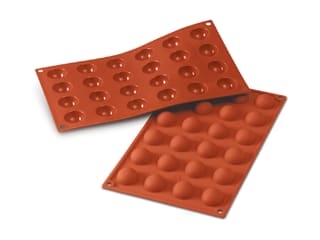
Fill the cavities of a 24-cavity silicone half-sphere mould Ø 3 cm with the peach preparation.

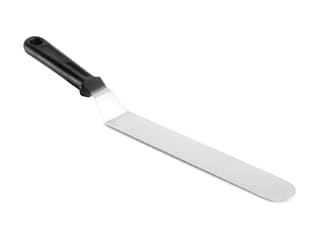
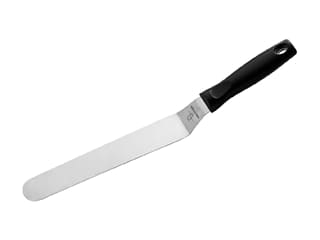
Smooth the surface with a cranked spatula...

...and cover with cling film directly on the surface.

Verbena jelly: To make this verbena jelly, we must first prepare the elements to make the infusion.

Bring the water to a boil.

When the water is boiling, add 1 to 2 verbena bags, depending on the desired flavour intensity.

Leave to infuse for a few minutes. Set aside.

Peach insert (continued): Peel the peach...

...and slice with a mandoline to a thickness of about 3 to 4mm.

Cut the resulting peach slices into sticks of the same width, then into small cubes, trying to keep the cubes regular.

Here are our peach cubes.

Fill the cavities of a second 24-cavity silicone half-sphere mould with these peach cubes.

Verbena gel (continued): Remove the tea bags from the saucepan...

...and weigh out the sugar, agar-agar, and herbal tea. Keep the rest of the herbal tea for the peach/verbena mousse to be made later (step 53).

Heat the verbena with the sugar.

Add the agar-agar while whisking...

...and bring to a boil for at least 1 minute.

Without waiting, pour the infusion into the cavities of the mould to trap the peach cubes before the infusion sets. Be careful, setting happens quickly with agar-agar.

Release the peach inserts made previously...

...and place them directly in contact with the verbena jelly and the peach cubes, preferably before the jelly is solidified, to ensure both components are bonded together. There is no risk of the top part sinking, because the peach cubes will prevent it from sinking into the liquid verbena jelly.

Repeat the operation with all spheres and cover them with cling film directly on the surface. The two flat parts must be perfectly aligned.

Place in the freezer. These peach inserts can be made in advance and kept in the freezer, allowing you to split the preparation steps over several days.

Soft almond sponge: Prepare all the ingredients.

In the stand mixer bowl, pour the whole eggs as well as the icing sugar.

Add the almond powder.

Beat the mixture with the whisk for 3 or 4 minutes...

...until the mixture is pale and fluffy.

In a second bowl, pour the egg whites. Add a pinch of fine salt.

Whip the whites, and when they begin to look very frothy, add the caster sugar.

Whip the egg whites until stiff peaks form.

Pour the preparation into a pastry bowl...

...and add the flour.

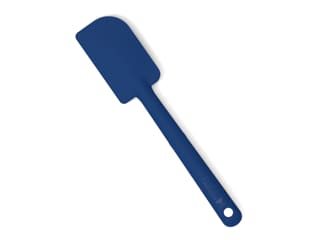
Mix using a maryse spatula.

Add the melted and cooled butter.

Mix gently with the maryse spatula.

Add the whipped egg whites...

...and mix gently once more with the maryse spatula until smooth and homogeneous.

Our soft almond sponge is ready.

Spread the batter onto a sheet of greaseproof paper, placed on a baking tray.

Spread the almond sponge batter using a cranked spatula to an even thickness...

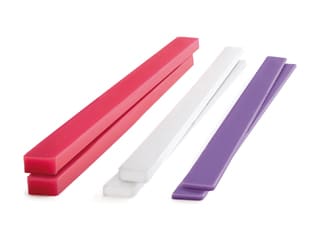
...to ensure even baking. I also used levelling guides along the edges of the tray to get a very even thickness across the entire surface of the batter.

Bake in a fan-assisted oven, preheated to 170°C, for 12 minutes. This cooking time may vary from one oven to another.

After baking, remove the tray from the oven...

...and let the soft almond sponge cool to room temperature.

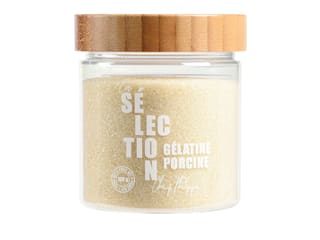
Peach/verbena mousse: Prepare all the ingredients. Mix the powdered gelatine with the hydration water (tap or mineral water) and let it hydrate for 15 minutes.

Heat the peach purée in a saucepan along with the verbena infusion and add the caster sugar while mixing with a whisk...

... to dissolve the sugar into the purée and infusion.

When the mixture is hot (no need to bring to a boil unless your peach purée was previously frozen), add the hydrated gelatine mass.

Mix with a hand blender to thoroughly incorporate the gelatine into the hot purée.

Transfer this peach preparation into a food container for cooling. The larger the container and the thinner the layer of peach purée, the faster it will cool.

Set aside at room temperature, outside of the fridge, to prevent premature setting.

Preparing the sponge: Once the sponge has cooled, cover it with a sheet of greaseproof paper.

Flip everything over by holding the 3 layers with your fingers and making a quick rotating movement.

Peel away the baking sheet that adheres slightly to the sponge. This should be removed when the sponge is completely cold to avoid tearing it.

Cut out discs of sponge using a plain round cutter Ø4cm, which will serve as the base for our entremets.

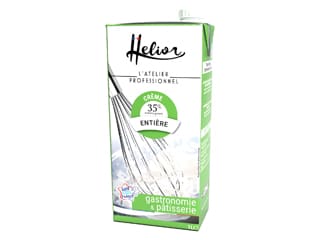
Peach/verbena mousse (continued): Meanwhile, whip the very cold heavy liquid cream...

...into a soft whipped cream.

Pour the cooled peach purée (room temperature) into a container.

Add half of the whipped cream...

...and mix quickly with a whisk without needing to be particularly gentle.

This is what the result should look like.

Add the remaining whipped cream...

...and fold it in gently with the maryse spatula until our peach/verbena mousse is smooth and homogeneous. Transfer this preparation into a piping bag. No nozzle necessary.

Assembly: Take the peach silicone mould and place it on a tray or a rack.

Pipe the peach/verbena mousse into the cavities of the peach silicone mould, filling them halfway.

Tap the tray on the worktop to settle the mousse firmly into the cavities and thus avoid air bubbles. The soft whipped cream ensures the peach mousse stays soft as well and easy to mould. If your whipped cream is too stiff, the mousse will be firmer, so you might need to spread the preparation with a mini spatula onto the sides of the cavity to get rid of air bubbles.

Release the inserts and bury them gently into the peach mousse. Try to arrange the sphere horizontally so that it is centred when the entremets is cut. Ideally, the seam of the insert should perfectly horizontal. This is a detail, but aesthetics are important for trompe-l'oeil desserts.

This is what the result should look like.

Fill the remaining space in the cavities with the rest of the peach/verbena mousse.

Tap the tray on the worktop to settle the mousse firmly into the cavities.

Finish with the soft almond sponge discs to seal the cavities.

Remove the excess mousse that rises up the sides.

Cover everything with cling film directly on the surface and place in the freezer.

Finish: On the day, take the mould out of the freezer and remove the cling film.

Release the peaches immediately, first by loosening the edges of the mould and pressing from underneath to extract the entremets one by one. This operation must be done with entremets that are frozen through and immediately upon removal from the freezer.

Arrange the entremets on a baking tray protected with cling film. This tray will be set on a turntable for an easier coating process.

We are going to use these 3 velvet effect sprays to give the appearance of peach skin and shaded colour gradations like real peaches.
Make sure to shake the bottles well before use, until the ball rattles inside the aerosol (a sign that the colour ready to use).

Spray the peaches with the peach-coloured velvet spray first. This will be the dominant colour covering the peach entirely. Spray from a distance of 20 to 30cm. Do a test spray before spraying directly onto the entremets, which must be frozen through.

Next, spray a little red to bring a nuance of colour. This addition will be made in small touches. Don't forget to do a test spray before spraying directly onto the entremets.

Finally, add a few nuances of yellow to finish the coating. Each colour layer should be thin. If the layers are thick, the coating might crack.

Arrange a peach carefully on a serving platter. For individual entremets like these, I recommend doing a trial on a single entremets to check the appearance before starting on the finishing of the others.

Repeat the operation with the rest of the peaches.

Alternate between the various colour layers...

...as I explained in steps 86 to 88.

Once finished, let the entremets thaw for 3 to 4 hours in the fridge before serving. Enjoy!

Please login to post a review
