












Cookies 🍪
By clicking "Accept", you authorize Meilleur du Chef to store cookies on your device to personalize site content, analyze our traffic, and provide social media functionality.


Favourites



In one click, store and find all your favourite recipes.
Add this recipe >
Shortcrust pastry: To make this pâté en croûte recipe, start by preparing all the ingredients for the shortcrust pastry (also known as pastry for lining).

Cut the cold butter into cubes...

...as shown in the photo.

Pour the flour and fine salt into the stand mixer bowl.

Start mixing with the dough hook attachment and add the butter, which must be very cold.

Sablé the flour and butter to obtain a sandy texture, like a crumble.

When the flour/butter mixture is ready, gradually and simultaneously add the water and egg yolks.

Knead everything until a homogeneous dough is obtained. Be careful, do not overwork this dough.

We obtain our shortcrust pastry.

Transfer this dough to the work surface to knead it into a homogeneous mass and work it with the palm of your hand.

Our shortcrust pastry is ready.

Take about half of the dough and press it with the palm of your hands onto the floured work surface to flatten it slightly.

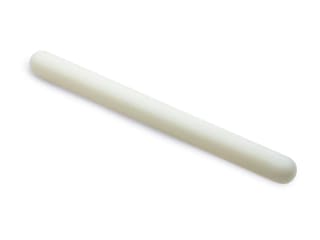
Then Roll out with a rolling pin to an even thickness of 3mm.

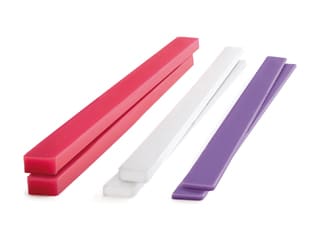
To do this, you can use levelling guides to obtain a homogeneous thickness. At this stage of the recipe, place the dough in the fridge (1 hour minimum) to firm up before lining the mould.

Take the measurements of the pâté mould, which is 9cm high...

...by 30cm long...

...and 12cm wide. Adapt these to the mould you have at home if you are not using the same mould as in this recipe.

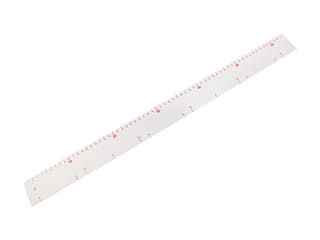
Cut out a rectangle of shortcrust pastry using a knife and a graduated ruler. This rectangle should be 30cm (the length of the pâté en croûte) by 32cm (twice the height + the width + an extra 2cm).

Here I am just tracing the fold lines with the tip of the knife to help the pastry fit into the corners of the bottom of the mould to form a U-shape. This is not a cut, and this step is not mandatory.

Now cut out two squares of shortcrust pastry measuring 12 x 10cm for the sides.

Finally, cut a 30 x 12cm rectangle of dough for the lid of the pâté en croûte. I remind you that it is better to cut these pieces of shortcrust pastry when the dough is very cold, as they will be easier to handle.

Place all these pieces of shortcrust pastry on a baking tray lined with greaseproof paper and put them in the fridge to firm up.

Lining the mould: Take the pâté en croûte mould; here we are using a perforated mould. Grease the entire interior of the mould using an oil spray or with butter to make it easier to unmould the pâté en croûte.
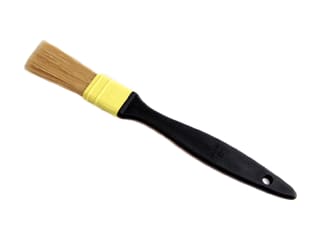
Position the large piece of shortcrust pastry in the bottom and up the sides of the mould. If measured correctly, the dough should overhang by 1cm at the top. Using a pastry brush, apply egg wash (made of a beaten egg yolk) to the edges to seal the joints.

Fit the end pieces by positioning the first square of shortcrust pastry; it should fit the width perfectly (or even slightly wider) and also overhang at the top.

Do the same for the other side. Press with your fingertips into the corners to ensure the dough adheres well.

We achieve this result.

Cover everything with cling film and place in the fridge.
You can see at the top of the photo the lid of shortcrust pastry, which must be covered with film directly on the surface and kept in the fridge.

Confit garlic: Start by peeling the garlic cloves. You will need about 10 to 12 large cloves for one pâté en croûte. Adjust this quantity based on the size of your mould.

Prepare the ingredients for the confit garlic.

Place the garlic cloves in a saucepan and add a little fresh thyme, a bay leaf, and a pinch of fleur de sel.

Cover everything with sunflower oil.

Place the saucepan in a fan-assisted oven, preheated to 140°C, and cook for 1 hour.

Once cooked, the garlic will be slightly golden. Remove the saucepan from the oven, being careful not to burn yourself...

...and let it cool to room temperature.

Stuffing (make the day before): Start by preparing the various meats. Here we are using pork neck roast.

Meticulously remove the strings.

Repeat the operation with the lamb shoulder.

Take the fresh pork belly and remove the rind using a boning knife or a sole filleting knife. The rind is the thick, hard skin; it will not be used in the recipe.

Take the necessary amount of meat for the recipe.

Remove the cartilage from this piece of meat with the knife.

Here is the piece of meat containing the cartilage that we just removed so it doesn't end up in the pâté en croûte.

Also weigh the chicken livers.

Cut the pork roast into fairly thin strips so they can fit through the meat mincer.

We will start by mincing the pork roast. For this, we use a plate with 8mm holes.

Mince all the pork neck (roast), as shown here in the photo.

Proceed in the same way with the lamb shoulder, which also needs to be cut into strips narrow enough for the mincer.

Here we will use a fine plate with holes 1.5 to 2mm. The diameter can be adapted based on the plates you have.

Mince the lamb and set it aside in a second container.

This is what the result should look like.

Cut the fresh pork belly into strips as well, as we did with the other meats.

We will use an intermediate plate with holes 4 to 5 mm in diameter.

Mince the pork belly into a third container.

Finally, mince the chicken livers using the plate used for the lamb shoulder (fine plate with 1.5 to 2 mm holes).

We should obtain a purée of chicken livers.

Here are our minced meats with different textures achieved by using different mincing plates.

Combine all these minced meats in a large container...

...namely the pork, the lamb, and the fresh belly, but without the chicken livers.

Now we are going to rehydrate the porcini mushrooms. To do this, boil a large quantity of water and, when boiling, submerge the mushrooms...

...and let them hydrate for at least 15 minutes in the boiled water, off the heat.

Once hydrated, drain the porcini in a sieve and set aside. Remove excess water by pressing them lightly.

Drain the cooled garlic cloves as well.

Strip the leaves from the fresh thyme sprigs and chop them finely with a knife.

Add these thyme leaves to the minced meat...

...along with the fine salt...

...and mix everything with your fingertips to incorporate these two elements into the minced meat.

This is what the result should look like.

Add the chicken livers...

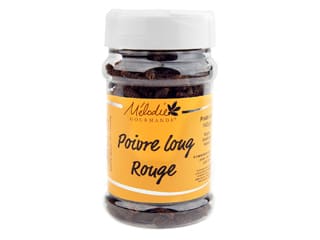
...the ground pepper, the long red pepper, and the four-spice blend.

Mix by hand until a homogeneous preparation is obtained; it will become sticky as you work it. This can also be done in a stand mixer at low speed with the paddle attachment.

Tear the white bread into small pieces into a mixing bowl...

...and add the milk so the bread absorbs it.

We obtain a mixture called a "panada".

Add this "panada" to the stuffing...

...along with the whole eggs...

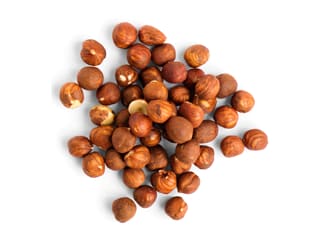
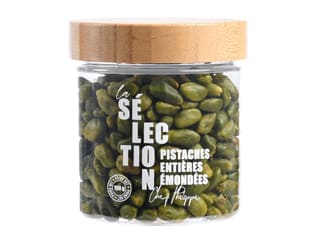
...the whole hazelnuts, and the whole pistachios.

Mix everything thoroughly to combine all these ingredients into a homogeneous preparation.

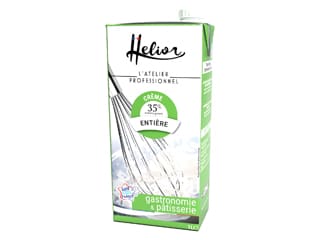
Finally, add the whipping cream...

...and mix with a spatula until the stuffing is uniform.

Add the Cognac liqueur...

...and mix again. Cognac can be replaced with Madeira or red Port but avoid Armagnac as it would be too dominant with the lamb.

Once the porcini mushrooms are well drained...

...chop them with a knife into medium-sized pieces.

Add these chopped porcini mushrooms to the stuffing...

...and mix with a spatula.

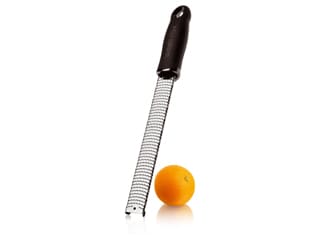
Add the zest of one lemon using a Microplane Classic grater.

This addition is optional, but it will enhance the flavour of the lamb.

Mix to incorporate the lemon zest into the stuffing.

Cover the stuffing with cling film directly on the surface...

...and film the container by stretching cling film over the edges. Place in the fridge for at least 12 hours to allow the preparation to marinate and the flavours to meld.

Assembly: Remove the pâté en croûte mould containing the cold shortcrust pastry from the fridge.

Pack the stuffing into the bottom of the mould by hand, directly against the shortcrust pastry, filling the mould halfway.

Arrange the garlic confit cloves in the centre of the pâté en croûte one after the other (as shown in the photo) so that there is garlic on every slice once cooked and sliced.

Cover the garlic with a second layer of stuffing until it reaches the top of the mould.

Then fold the overhanging pastry edges inward...

...and brush the edges of the dough with egg wash.

Place the pastry lid on top...

...which must be the exact dimensions of the mould.

Brush the entire surface of the shortcrust pastry with egg wash. The edges will seal during baking, and the egg wash on top will give the pâté en croûte a beautiful golden colour.

Create a pattern on the lid with the tip of a knife without cutting through the shortcrust pastry; just score it deeply enough so the design remains after baking. This must be done after applying the egg wash.

Here we are making a diamond lattice pattern, but you could also do waves, zigzags, flowers, or other designs...

Before baking, we are going to make two chimneys. To keep them open during baking, I use two plain piping nozzles (diameter 1.5 to 2cm). After forming the hole with the narrow end of the nozzle and removing the small disc of dough, insert the nozzles into the holes.

Remove the nozzles to achieve this result.

Using a round plain cutter Ø 4cm, cut out two discs of shortcrust pastry.

Remove the centre of these discs with a round plain cutter Ø 2cm to obtain two pastry rings.

Apply egg wash to the underside of these rings and place them around the chimney holes, then brush their surface with egg wash as well.

Re-insert the nozzles into the holes; they will stay in during baking to prevent the chimneys from closing. Lightly grease the edge of the nozzles to make them easier to remove after baking.

Place the mould on a rimmed baking tray, as juice or fat might be released during baking.

Bake in a fan-assisted oven, preheated to 180°C, for 70 minutes.
Note: adjust the cooking time based on the size of your pâté en croûte if you are using a different-sized mould.

At the end of cooking, the pâté en croûte should be golden brown on top.

Remove the pâté en croûte from the oven...

...place it on the work surface and remove the nozzles, being careful not to break the pastry border. Let it cool at room temperature for at least 30 minutes.

You can remove the mould by taking out the two pins and sliding the base before extracting the sides.
Based on experience, I recommend removing the mould once the jelly has been added and set.

Our pâté en croûte is unmoulded. Now simply let it cool completely in the fridge until the next day before adding the jelly.

You can see the pattern on the side created by the perforated mould.

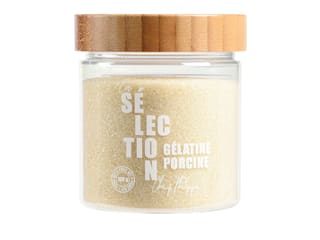
Jelly: Prepare the ingredients. Mix the powdered gelatine with the water (tap or mineral) and let it hydrate for 15 minutes. Then prepare the lamb jus and let it cool.

Once the lamb jus has cooled, bring it to room temperature (about 25°C) while whisking.

Add the hydrated gelatine mass (previously melted in the microwave) and whisk carefully until fully incorporated.

Season with fine salt and ground pepper if necessary. Mix again.

Transfer this jelly into a piston funnel.

Remove the pâté en croûte from the fridge...

...and pour the jelly into the first chimney to fill all the empty cavities inside the pâté en croûte.

Do the same with the second chimney...

...until the jelly level reaches the edge. Let the jelly set in the fridge until serving. Allow at least 1 hour in the fridge after adding the jelly before slicing and serving.
Bon appétit !

Best sliced using a serrated knife.
Please login to post a review