




Cookies 🍪
By clicking "Accept", you authorize Meilleur du Chef to store cookies on your device to personalize site content, analyze our traffic, and provide social media functionality.


Favourites



In one click, store and find all your favourite recipes.
Add this recipe >
To make this dark chocolate Easter bunny with vanilla marshmallow, begin by preparing the ingredients for the dark chocolate shells.
We will temper the chocolate using the seeding method. To do this, we must divide the chocolate into 1/3 and 2/3 portions.

Finely chop the smaller quantity of dark chocolate with a knife.

Melt the larger quantity of chocolate in the microwave in 20 to 30-second intervals, stirring every time...

...so that it does not burn and without exceeding 45/50°C.

Once the dark chocolate is entirely melted and reaches a maximum of 50°C, add the freshly chopped chocolate all at once...

...and mix to incorporate the chopped chocolate into the melted chocolate. The chocolate mass will cool down quickly and should reach a temperature of 31/32°C (the ideal working temperature for tempered dark chocolate).

If any unmelted chocolate lumps remain, you can use a hair dryer or a heat gun to melt them.
Note: If you reheat the chocolate, make sure the temperature increases by 1 to 2°C maximum.

When the dark chocolate is completely melted and reaches 31/32°C, it is tempered and ready to use. Pour it immediately into the 8-cavity silicone mould, filling the cavities 3/4 full.

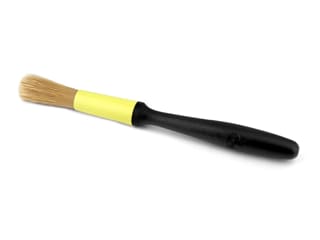
Using a pastry brush or a mini spatula, spread the tempered dark chocolate up the sides of the cavities.

Place a wire rack over a baking tray lined with a sheet of baking parchment and flip the silicone mould in a quick motion onto the rack, so that the excess dark chocolate drains into the tray.

Tap the tray on the work surface to thoroughly hollow out the mould cavities, leaving only a thin layer of dark chocolate.
Keep the excess tempered dark chocolate in a container in a fan oven preheated to 35°C so you can seal the rabbits later without having to temper the chocolate again.

Then flip the mould back over...

...and scrape the surface using a chocolate spatula to obtain a clean, sharp edge.

Leave the dark chocolate to crystallise at room temperature, preferably in a cool room (18/19°C), until the chocolate solidifies, as shown here in the photo. The crystallisation time may vary depending on the ambient temperature of the room.

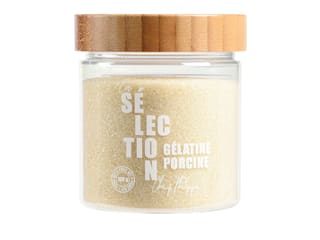
Vanilla marshmallow: Prepare all the ingredients. The large quantity of invert sugar will be weighed directly into the stand mixer bowl, and the small quantity will be weighed separately in a container. Then mix the powdered gelatine with the hydration water (tap water or mineral water) and leave to hydrate for at least 15 minutes.

Pour the caster sugar and water into a saucepan.

Add the small quantity of invert sugar...

...and bring the mixture to the boil.

While cooking, mix these elements together with a spatula.

Once boiling, check the temperature using an electronic probe thermometer. It must reach 110°C.

When the syrup reaches 110°C, stop the cooking and remove the saucepan from the heat.

Place the hydrated gelatine (known as gelatine mass) into the mixer bowl, directly onto the invert sugar...

...and pour the sugar cooked to 110°C over the mass while mixing with the whisk attachment at low speed.

Once all the syrup is incorporated, gradually increase the mixer speed according to the texture obtained. The mass will gradually transform into marshmallow.

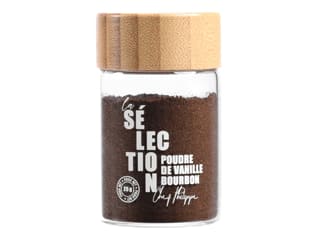
While mixing, add the vanilla powder. The amount depends on the flavour intensity you wish to achieve.

Continue whisking the preparation until it is lukewarm, around 35°C, as a mass that is too cold will be difficult to pipe (too elastic).

The vanilla marshmallow is now ready.

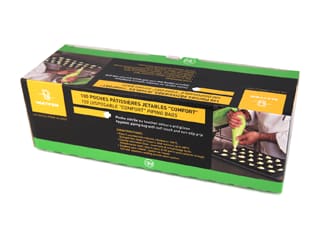
Transfer into a piping bag. The use of a nozzle will not be necessary here.

Pipe this vanilla marshmallow into the crystallized dark chocolate shells. The marshmallow should not exceed 33/34°C, or it may melt the chocolate shells.

The cavities should be filled up to 3/4.

Crunchy dark chocolate filling: Here we are using the read-to-use crunchy dark chocolate and hazelnut filling by Unipatis.

Soften the crunchy filling in the microwave for a few seconds to make it easier to use. Then transfer it into a piping bag (without a nozzle).

Pipe the crunchy dark chocolate and hazelnut filling into the chocolate shells, directly onto the vanilla marshmallow.

Smooth the surface of the filling using a mini cranked spatula. There should only be 2 to 3 mm of empty space left on top to seal the cavities.

Finish: Remove the remaining tempered dark chocolate (kept warm in step 11) from the oven. Mix until it reaches 31/32°C and place it in a piping bag (without a nozzle)...

...to pipe it over the crunchy filling to seal the rabbits.

Smooth the surface with the chocolate spatula. It is normal to have a lot of chocolate on the edges of the mould, as each cavity is surrounded by a small raised border that prevents the mould surface from being scraped perfectly clean. Leave the dark chocolate to crystallise at room temperature in a cool room.

After crystallisation, place the mould in the fridge for 10 minutes just before flipping; this will make it easier to release the rabbits. After this cooling time, remove the mould from the fridge and gently extract a rabbit from the silicone cavity.

This is what the dark chocolate bunny should look like.

Repeat the process for all the chocolates. Your dark chocolate Easter bunnies are now done. Enjoy!
Please login to post a review